- S2E363: How to Be a Mentor to Your Kid (Not Just a Parent)

Many parents worry about whether their kids are developing the character, resilience, and adaptability needed for a fast-changing world. In this episode, Mackenzie sits down with Chauncey—a former Teach for America core member, NYC Department of Education leader, Goldman Sachs talent executive, and current Alpha School guide. Chauncey shares how combining high standards with high support creates the ultimate mentor mindset, and how parents can bring these exact frameworks into their homes. Chauncey breaks down why most life lessons are "caught, not taught," how to decouple age from learning stage so kids master concepts without shame, and practical ways parents can step into their child’s world to unlock quiet or anxious kids. Episode Timestamps03:28 - Chauncey’s Journey: Teach for America, Penn, Dept of Ed & Goldman Sachs 08:08 - Why AI Education Is 90% Human Mentorship, 10% Technology 09:02 - The "Big Game" vs. "Little Games": Raising Kids with Character 11:57 - Transitioning from Traditional Teaching to the Mentor Model 13:59 - Lessons Are Caught, Not Taught: The Mirror Loop for Parents 15:33 - The "Glows, Grows & Everyone Should Know" Daily Framework 18:31 - How Taking Immediate Ownership Neutralizes Conflict 20:04 - "Love of School Is Love of Life": Making Daily Routines Joyful 22:50 - High Standards + High Support: Why Kids Crave Real Challenges 26:18 - Decoupling Age and Stage: Eliminating Academic Shame in Kids 31:20 - How to Step Into the World of a Quiet or Anxious Child 34:09 - Bringing World-Class Educational Innovation to a Billion KidsWatch the Future of Education on YouTube: www.youtube.com/@future_of_educationRead MacKenzie's Substack: www.futureofeducation.substack.comLearn more about our schools: www.2hourlearning.com/schoolsLearn more about Alpha School: www.alpha.school
- S2E362: Is Your Kid's School Teaching Reading Wrong? 5 Non-Negotiables from a Curriculum Expert

National reading scores are plummeting, yet many schools are still using reading programs that completely ignore basic learning science. In this episode, Mackenzie sits down with curriculum expert and learning scientist Karen Vaites to unpack the national literacy crisis and expose what most schools get wrong about teaching kids to read.Karen unveils the 5 non-negotiables every parent must evaluate their child’s elementary reading curriculum for. She exposes why traditional classrooms are failing young readers and gives parents an actionable 5-step checklist—covering phonics, progress screening, knowledge-building, reading volume, and writing—to ensure their child gets the reading education they deserve.Episode Timestamps: 00:00 - The National Literacy Crisis & Guest Introduction01:12 - Why Early Reading Is the Tailwind for All Academic Success02:51 - What’s Driving the Reading Decline? Screens & School Distractions05:23 - Science of Reading vs. Faddish Classroom Methods08:08 - The Cricket Passage Test: Why Background Knowledge Drives Comprehension12:38 - The "Southern Surge": How Mississippi & Louisiana Turned Scores Around15:37 - Phonics vs. Whole Language: How Kids Actually Learn the English Code22:44 - Non-Negotiable 1: Phonics (What to Look For)25:43 - Non-Negotiable 2: Third-Party Screening27:38 - K–2 Milestones: When Should Parents Actually Worry?30:14 - Non-Negotiable 3: Knowledge-Building Curricula33:21 - Non-Negotiable 4: High Volume of Reading Full Books34:00 - Non-Negotiable 5: Integrated Daily Writing34:30 - What Parents Can Do at Home to Safeguard Literacy37:08 - Next-Gen Tools: Alpha Phonics & Science-Backed Learning38:34 - Decoding Irregular Words41:39 - Debunking the Biggest Literacy Myth in American EducationResources & Links MentionedUFLY (University of Florida Literacy Institute): www.ufli.education.ufl.edu/Teach Your Child to Read in 100 Easy Lessons: https://a.co/d/0j64tHNYThe Knowledge Matters Campaign: https://knowledgematters.org/Watch the Future of Education on YouTube: www.youtube.com/@future_of_educationRead MacKenzie's Substack: www.futureofeducation.substack.comLearn more about our schools: www.2hourlearning.com/schools
- S2E361: The Harvard Business Approach to Raising Critical Thinkers
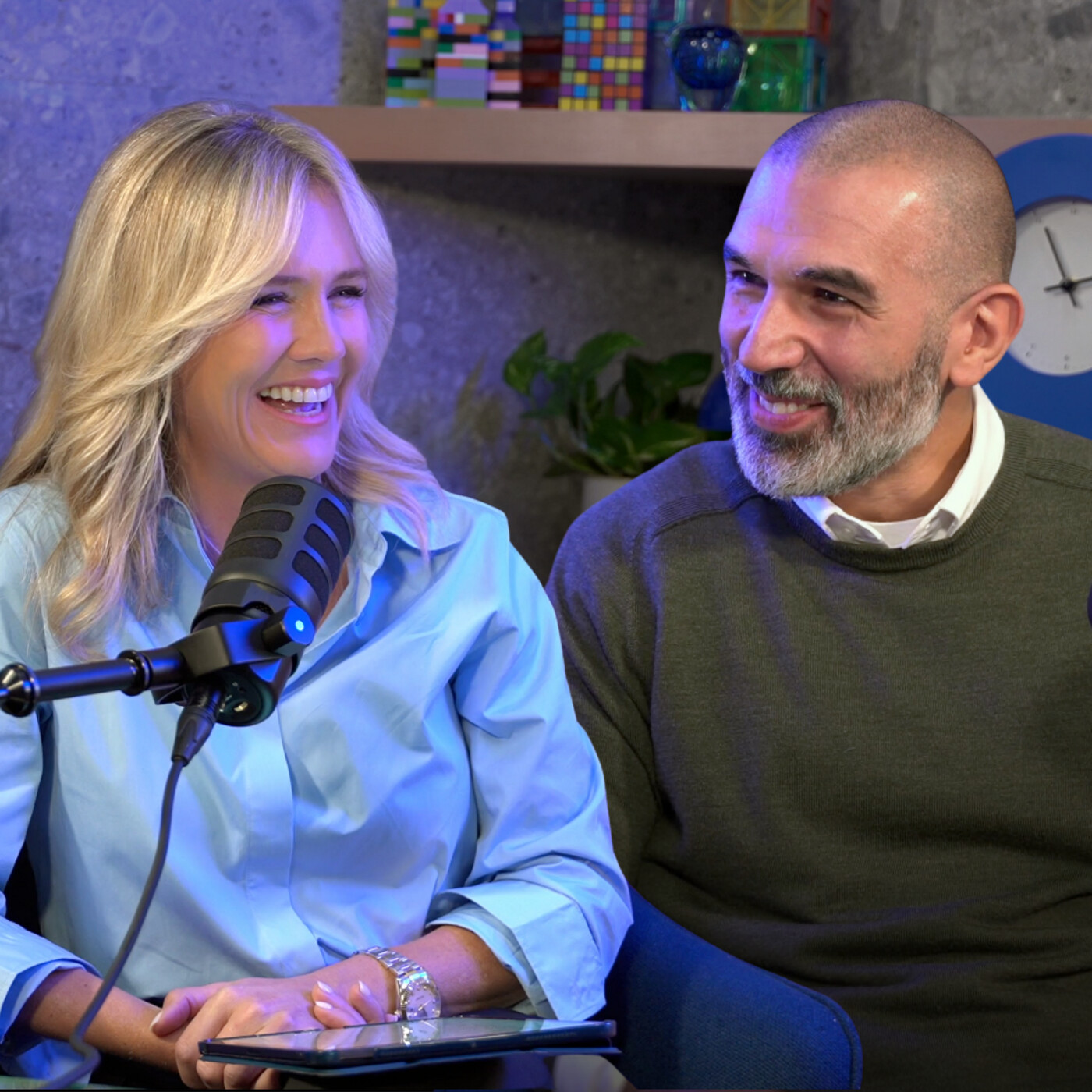
Many kids today are struggling to think independently, handle high-pressure moments, and make strategic choices on their own. Terrence McMullen—a Harvard MBA graduate and Dean of Parents at Alpha—is on a mission to fix that. Having spent 15 years teaching advanced business acumen and negotiation to K-12 students, Terrence has built programs alongside Goldman Sachs and partnered with over 20 top independent schools across New York. In this conversation, Terrence shares how adapting the Harvard Business School case method equips parents to build deep critical thinking, refine real-world communication, and raise adaptable children who know how to analyze complex situations on the fly.In this episode, we discuss:The Harvard Business School Case Method: How Socratic questioning and real-world business scenarios encourage kids to think on their feet and question their own assumptions. Teaching Strategy Through Scenarios: An inside look at how a Steve Jobs iPhone launch case teaches 10-year-olds pricing, positioning, and market trade-offs. Real-World Application: How student-led projects give kids direct experience. Practical At-Home Exercises: Simple strategies parents can use during daily routines. Recognizing Critical Thinking Gaps: Behavioral signs that indicate a child needs practice in evaluating alternatives. Strategic Communication & Empathy: How teaching kids to read non-verbal cues improves social competence and negotiation skills. Episode Timestamps:01:28 - The Socratic case method at Harvard Business School 02:37 - Adapting business challenges for young students 04:13 - Example: Using the Steve Jobs iPhone launch to teach marketing and pricing 07:16 - Real-world simulations: Student-run operations and financial accountability 08:58 - The limitations of test-focused traditional classrooms 11:32 - Why business topics serve as an engaging medium for critical thinking 12:50 - Step-by-step guide for parents to run case discussions at home 19:49 - Behavioral indicators that a child lacks problem-solving flexibility 22:26 - Resist the "easy button": Supporting children without solving every issue 27:50 - Using post-mortem discussions to reflect on decisions without judgment 33:20 - Developing strategic communication, empathy, and active listening 38:52 - How parental mindfulness and reflection support child development Watch the Future of Education on YouTube: www.youtube.com/@future_of_educationRead MacKenzie's Substack: www.futureofeducation.substack.comLearn more about our schools: www.2hourlearning.com/schoolsLearn more about Alpha School: www.alpha.school
- S2E360: A Stanford ER Doctor’s Blueprint for Raising Healthy Kids— With Dr. Viveta Lobo

What does it actually take to keep kids healthy, active, and out of the emergency room? In this episode, MacKenzie sits down with Dr. Viveta Lobo—a Stanford ER physician, professor, Alpha parent, and mother of three—to unpack a practical, preventive approach to childhood health, physical fitness, and nutrition. In this conversation, Dr. Lobo breaks down commonly asked questions in a compilation of essential, doctor-approved best practices for parents.In this episode, we cover:Movement as Brain Fuel: How physical activity releases BDNF ("Miracle-Gro for the brain") to improve executive function, memory, and classroom focus.Strength Training for Kids: Dispelling myths around weightlifting, and why resistance training helps kids—especially those carrying extra weight—build physical competence over humiliation.Building Child Agency: Why letting kids handle age-appropriate responsibilities (from setting alarms to planning family meals) builds real-world judgment that AI cannot replace.Practical Family Nutrition: The 80/20 approach to snacks, hitting daily protein targets (~1.5g/kg), and enforcing the "three-bite rule" for picky eaters.Preventive Healthcare: Moving away from reactive ER visits to establish core lifestyle habits (movement, nutrition, mental health, community) early in life.Episode Timestamps:00:00 - Meeting Dr. Viveta Lobo00:56 - Shifting from Reactive ER Care to Preventive Health03:38 - Relocating to Austin & Choosing Texas Sports Academy05:00 - Why Physical Activity is "Miracle-Gro" for the Brain (BDNF)09:33 - Debunking Myths: Strength & Resistance Training for Children13:17 - Reframing Exercise for Overweight & Non-Athletic Kids22:52 - Building Agency & Independence in Children at Home25:07 - Food Formulas: Pantry Management, the 80/20 Rule & Gas Station Treats30:22 - Child Nutrition: Protein Targets & Complete Amino Acids39:22 - Overcoming Picky Eaters & The "Three-Bite Rule"43:38 - Maximizing Growth Potential & Childhood Height45:53 - Changing the Paradigm: Lifestyle Medicine Over Emergency Rooms49:26 - Early Warning Signs of Mental Health Struggles in Teens55:05 - Dr. Lobo’s Personal Journey: Micro-Preemies & Unlocking Limitless PotentialWatch the Future of Education on YouTube: www.youtube.com/@future_of_educationRead MacKenzie's Substack: www.futureofeducation.substack.comLearn more about our schools: www.2hourlearning.com/schoolsLearn more about Alpha School: www.alpha.school
- S2E359: The Reality of Building an Alternative School—With Infinity Academy Founders Gillian and Jenna

What actually happens when you leave traditional careers to build an alternative school from scratch? In this episode, MacKenzie sits down with fellow alternative school founders Gillian Berard (former public school teacher) and Jenna Baggott (former NICU nurse) to unpack the practical realities of launching Infinity Academy, a project-based microschool on 17 acres in Ontario. From navigating local zoning laws using yurt classrooms to balancing AI-powered personalized academics with outdoor life skills, it’s a candid, unfiltered look at the practical realities of launching an alternative school today.Episode Timestamps: 00:00 - Intro: Meeting the Founders of Infinity Academy 01:29 - Why Reforming Public Education Feels Like "Steering the Titanic" 03:22 - Leaving Nursing & Teaching to Build Something New 06:31 - Infinity Academy’s Vision: Self-Directed & Nature-Based 08:18 - Using AI & Adaptive Tools for Core Academics 12:45 - The Role of the Educator as a "Guide" 14:53 - Addressing Common Misconceptions About Alternative Schools 17:37 - Student Motivation & Real-World Application 19:09 - The Reality of Year 1: Zoning, Funding & Risk 24:09 - Yurt Classrooms & Bypassing Structural Permits 25:30 - Using Social Media to Prove What School Can Be27:45 - Practical Advice for Launching Your Own Microschool Connect with Infinity Academy on Instagram: @infinity_education.incLearn more about Infinity Academy: www.infinityacademyed.com/Watch the Future of Education on YouTube: www.youtube.com/@future_of_educationRead MacKenzie's Substack: futureofeducation.substack.comLearn more about all our schools: 2hourlearning.com/schoolsLearn more about Alpha School: alpha.school